Verification
An image you can trust.
Deep Phi tells whether an image was faithfully upscaled or tampered with, and where. Thermal imaging first, where an image proves something: a subsidy file, an insurance claim, an expert report.
Our ×4 upscaling of thermal images invents no zone; Real-ESRGAN invents 22 %.
AUROC of the fidelity check on Real-ESRGAN upscales, without knowing the real image.
Tampered radiometric thermal photos: all detected, at 5 % false alarms on untouched images.
×2 upscaling from 16 frames: 20 % less error than bicubic upscaling.
Upscale without inventing
ARCO thermal images (Thermitage, CC BY 4.0), 160 × 128 upscaled to 640 × 512 after bicubic reduction. RMS error in camera counts; invented zone = detail absent from the real image. SwinIR stays slightly more accurate: the point is elsewhere, in knowing what was added.
| Method | RMS error | Invented zones |
|---|---|---|
| Real-ESRGAN | 18.2 counts | 22 % |
| Deep Phi (φ-SR) | 6.1 counts | 0 % |
| SwinIR | 5.7 counts | 0 % |
| Bicubic | 6.4 counts | 0 % |
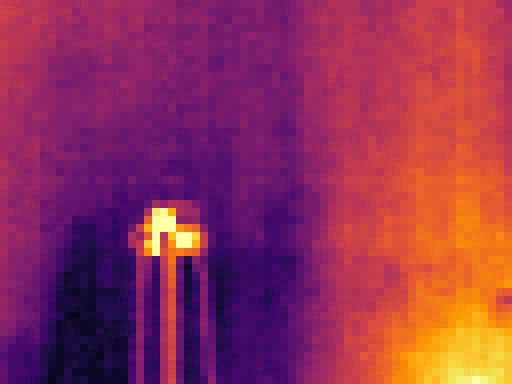
Source, 160 × 128
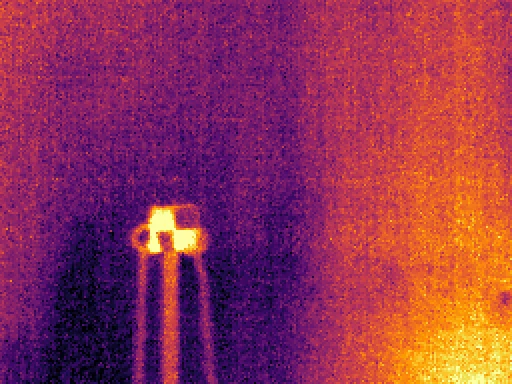
Real image
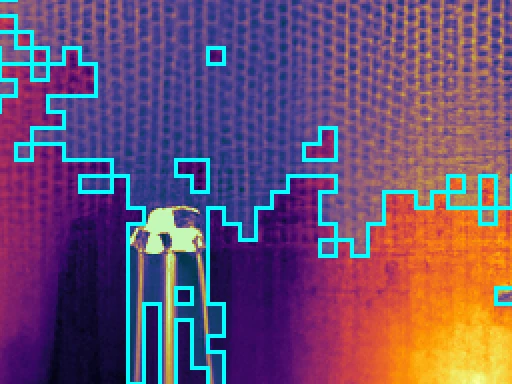
Real-ESRGAN: invented zones flagged
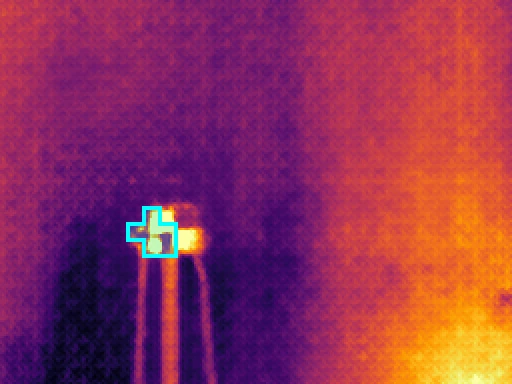
Deep Phi (φ-SR): a single spot flagged
Find the tampering
Share of tampered images detected, at 5 % false alarms (2 untouched images in 40, measured out of sample: each image left out of the calibration in turn). Synthetic tampering: no public set of thermal forgeries exists. The latest gain on radiometric photos (splicing, 8-bit retouch) is tuned and measured on ARCO only: it remains to be validated on a second radiometric set. ARCO photos (radiometric) and LTIR raw camera counts (Linköping, CC BY 4.0).
| Tampering | Radiometric photos | Raw camera counts |
|---|---|---|
| Real hot spot erased | 78 % | 85 % |
| Object removal | 100 % | 98 % |
| Local blur | 100 % | 92 % |
| Exact clone | 100 % | 100 % |
| Shifted clone | 100 % | 65 % |
| 8-bit retouch | 50 % | 100 % |
| Splice from the same camera | 50 % | 52 % |
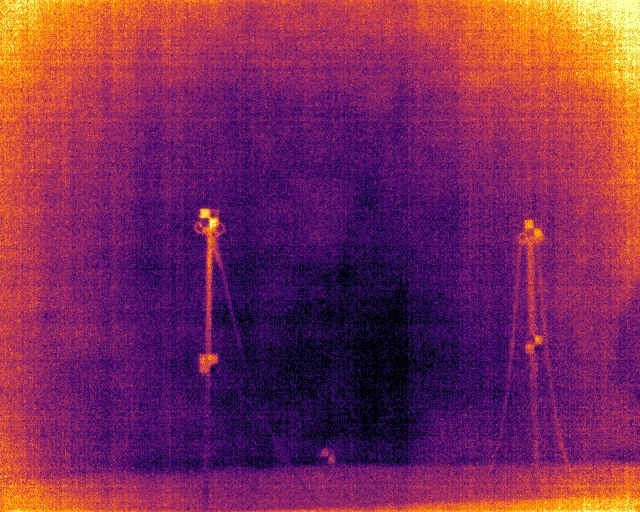
Untouched image
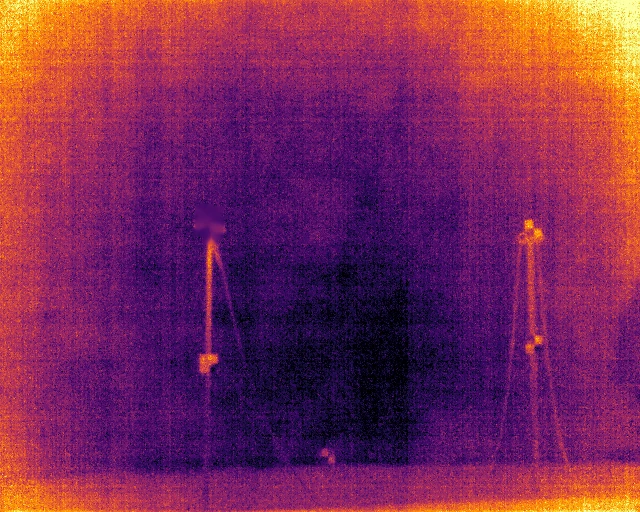
Hot spot erased
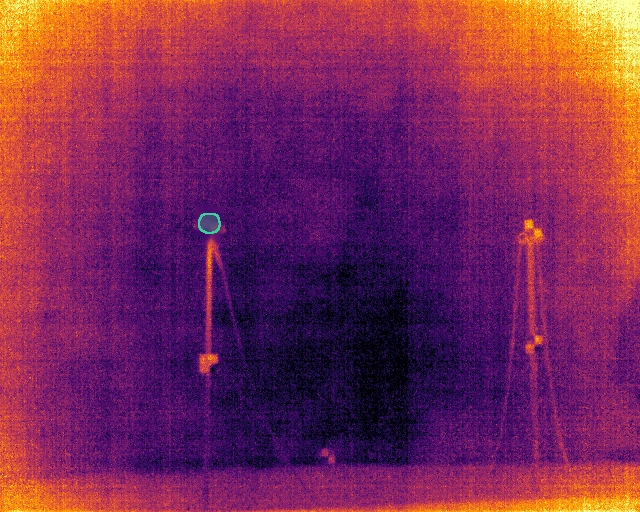
The tampering, located
What sets it apart
A verdict, and the place
“Faithful” or “not faithful”, “intact” or “tampered” — with the map of the zones involved.
No original needed
Checking an upscale needs only the source and the result; tamper detection, the image alone.
An end-to-end verifiable chain
Phidelity compression where every file checks its own decoding, controlled upscaling, then an integrity check.
Deterministic
Same image, same verdict: no generative model, nothing to take on trust.
Where it matters
Energy renovation and subsidies
The thermograms that justify a subsidy file.
Insurance
Claims for leaks, fires, electrical faults.
Electrical inspection
An erased hot spot is a repair avoided and a hidden risk.
Solar plants
Drone inspections: hot spots decide warranty claims.
Expert reports
Buildings, fires, defects: images that must stand up.
Upscaled images
Know, zone by zone, what an upscaling tool added to an image.
What it does not do
- Nothing is detected in compressed thermal video (H.264): compression erases the traces.
- Erasing a real hot spot still escapes about one time in four to five (78 % caught on radiometric photos, 85 % on raw counts).
- Splicing from another image of the same camera is caught only one time in two (50 to 52 %), as is an 8-bit retouch on radiometric photos.
- It is not an AI-retouch detector for a single colour photo.
- Detection rates are measured on synthetic tampering.
Try it on your images
- You send thermal images (radiometric or raw), or a source and its upscale.
- Within a week you receive a report: the verdict, then the map of the zones involved.
- Under NDA if needed; no image is published.